1 March 2025
Information
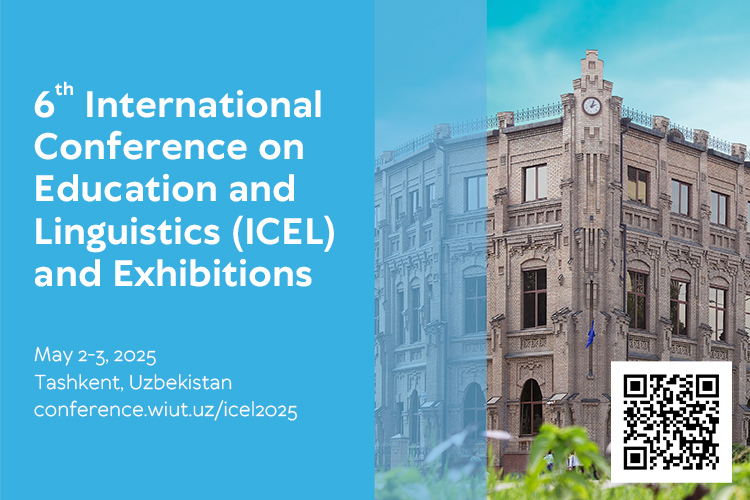
6TH INTERNATIONAL CONFERENCE ON EDUCATION AND LINGUISTICS (ICEL) AND EXHIBITIONS
Westminster International University in Tashkent
2-3 May 2025, Tashkent, Uzbekistan
Title of the conference: Innovations in Language Teaching and Applied Linguistics for Sustainable and Inclusive Future.
As we face global challenges, the role of effective communication and language skills becomes increasingly vital. This conference aims to showcase innovative teaching methods, research findings, and practical applications that empower learners, bridge cultural divides, and foster inclusive and sustainable practices in education and beyond. Topics ranging from technology-enhanced language learning to sociolinguistic approaches for community development all with the goal of shaping a more accessible and sustainable future through the power of language and education will be discussed over the two-day conference.
The main objectives of this conference are:
To examine the synergies between language learning and teaching, applied linguistics, and sustainable development, identifying innovative pedagogical strategies and frameworks that promote learner empowerment.
To foster the exchange of best practices and research findings on the integration of emerging technologies, digital tools, and multimodal approaches in language education.
To explore the role of language education in addressing global challenges, such as social inclusion, cultural diversity, and environmental sustainability, through collaborative and interdisciplinary initiatives.
To facilitate networking and collaboration opportunities among language educators, applied linguists, teacher educators, policymakers, and industry stakeholders to collectively shape the future of language learning and its impact on sustainable development.
To inspire and empower language learners to become agents of change, equipped with the linguistic, intercultural, and critical thinking skills necessary to navigate an interconnected world and contribute to a more equitable and sustainable future.
The proposed conference aims to provide a platform for experts in applied linguistics, language teaching, and education technology to share their knowledge, experiences, and innovative solutions for empowerment of the youth. The conference also aims to build the bridges that will contribute to a constructive dialogue in Central Asia and beyond bringing together teachers and researchers from various parts of the world to enhance current knowledge and practice regarding language education for sustainable development.
The preceding year's conference successfully convened 325 delegates from 17 countries, thereby establishing itself as a truly international gathering. The event attracted a substantial number of speaker proposals, with over 230 entries received. Ultimately, through a rigorous double-blind review process 105 presentations were selected for the conference, showcasing the latest research and developments in the field. Notably, the conference proceedings featured high-quality articles, which are now accessible on the conference website for further scholarly dissemination and discourse.
The conference might be of interest to local and international teachers, academics, students, professionals in
Higher Education Institutions
Primary and Secondary Education
Private Educational Institutions
Curriculum and materials development
Testing and Assessment organizations
Master and PhD studies
Relevant Ministries and centers
International organizations focusing on language education
The best-selected articles will be recommended to the Tertium Linguistic Journal.
Topics
CONFERENCE TOPICS
The conference accepts original research papers (not presented before) related to applied linguistics and language education on the following topics (but not limited to):
Foreign language acquisition
Issues in language testing and assessment
Modern trends in language education
Curriculum and instruction
ESP / EAP
Language policy and planning
Pragmatics
Discourse analysis and corpus-based approach to learning and teaching
Issues in translation
Sociolinguistics
Heritage languages (Central Asian languages study)
Digital Learning / Technology in Language Education / Blended Learning / AI
Language Teacher Education and Professional Development
Leadership and Management in Education
Inclusivity in language teaching, learning and assessment
Speakers
KEYNOTE SPEAKERS
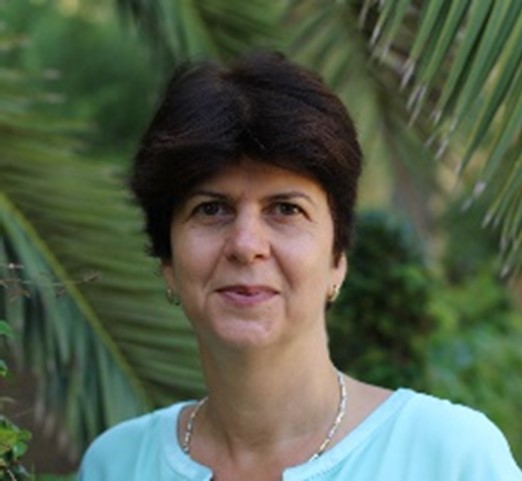
Prof. Judit Kormos
Professor of Second Language Acquisition, Lancaster University
Prof. Judit Kormos is a Professor of Second Language Acquisition at Lancaster University. She was a key partner in the award-winning DysTEFL and Comics for Inclusive Language Learning projects sponsored by the European Commission.
She is the lead educator of the Dyslexia and Foreign Language Teaching massive open online learning course offered by FutureLearn and the co-author of the book Teaching Languages to Students with Specific Learning Differences with Anne Margaret Smith.
Prof. Kormos has published extensively on the effects of dyslexia on additional language learning and has authored numerous research papers investigating the role of cognitive factors in second language acquisition.
New perspectives on inclusive language teaching: Building on research findings to enhance language learning for all.
A key challenge teachers face in the classroom is how to deal with learner diversity and how to cater for the variety of students’ needs. In this presentation, I focus on cognitive variation among students and discuss the impact of cognitive individual differences on language learning. I will showcase some of the inclusive language teaching methods that recent research has found to be effective in supporting the development of key language skills. The talk will conclude with suggestions on how further support can be offered to cognitively diverse language learners so that they also become successful in acquiring additional languages.
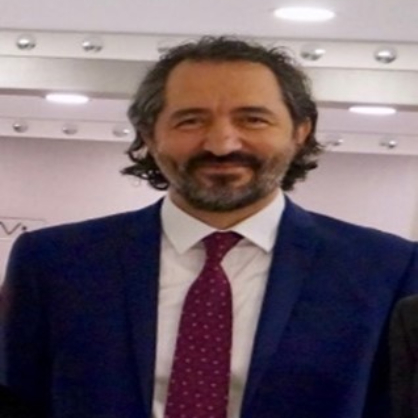
Dr. Mustafa Akıncıoğlu
Associate Researcher at the University of Oxford
Dr. Mustafa Akıncıoğlu is an Associate Researcher at the University of Oxford, where he has been actively publishing in the field of English Medium Instruction (EMI) since 2014. He holds a PhD by Existing Published Work, specializing in EMI higher education policy, quality, and professionalisation. As the Founding Convenor of the BALEAP EMI Special Interest Group (EMI SIG), Dr. Mustafa has played a pivotal role in advancing research and dialogue in this field. He has contributed to numerous international educational development projects, successfully undertaking diverse roles. His research interests span EMI, higher education policy and quality, professionalisation of higher education, Critical EMI, Critical EAP, learner autonomy, and Critical Discourse Analysis.
Re-Thinking EMI University: A Critical Dialogue on Policy, Interdisciplinary Pedagogy, and Institutional Excellence.
The professionalisation of EMI universities is often discussed as an aspirational goal, yet the challenge remains: how can institutions move beyond fragmented, ad hoc approaches to establish a structured, quality-driven framework that ensures both lecturer development and student academic success? This presentation engages critically with the intersection of EMI policy, interdisciplinary pedagogy, and institutional quality enhancement, proposing an evidence-based model for sustainable academic excellence.
At the core of this discussion is a pragmatic solution that rethinks EMI policy and governance, fosters interdisciplinary teacher collaboration, and establishes rigorous frameworks for EMI lecturer professional development and certification. Crucially, it aligns EMI instruction with cognitive and disciplinary rigor to enhance student academic learning outcomes. More than a theoretical exploration, this presentation introduces a research-informed, adaptable model designed for practical implementation across diverse EMI university settings—one that ensures measurable improvements in teaching efficacy and student achievement.

Thom Kiddle
Director at Norwich Institute for Language Education (NILE), the UK’s leading specialist language teacher development institute
Thom Kiddle is Director at Norwich Institute for Language Education (NILE), the UK’s leading specialist language teacher development institute. He has worked at NILE since 2011, after moving back to the UK from Chile where he was head of academic research and educational technology at the Chilean-British University. He has previously worked in Portugal, the UK, Australia and Thailand in language teaching, teacher training and language assessment. He has a Master’s degree in Language Testing from Lancaster University and the Cambridge DELTA, and his role at NILE involves strategic and organisational management, and training and consultancy in a range of areas including testing and assessment, learning technologies, materials development and language teaching methodology. Thom is also Chair of the Eaquals Board of Trustees; treasurer and a founding director of AQUEDUTO – the Association for Quality Education and Training Online; and a member of the British Council English Language Advisory Group.
He has published articles in Applied Linguistics, Language Assessment Quarterly, and System journals, and book chapters on a range of themes including Digital Language Learning Materials, Quality Assurance in Language Education, Online Teacher Education Course Design, and Evaluation. Thom is a regular presenter and chair at international and national ELT conferences and was a plenary speaker at IATEFL 2021.
Key Teacher Competences in the 2020s.
This presentation will look at the professional competences teachers need in the face-to-face and online classroom as the decade develops, and the implications for initial teacher education and in-service teacher development. We will consider the role of language change and language choices, content and language integration, digital technologies, remote learning and Artificial Intelligence, teachers’ assessment principles and practices, and awareness of the learning environment. These are all potential areas for effective teacher development, and may empower teachers to deal with the challenges of this exceptional decade. The invitation is to consider these competences in the light of the upheaval in teaching and learning which we all experienced over the first years of the 2020s, alongside the undercurrent of developments in Artificial Intelligence applied to education, and to examine how teachers may need to reframe and refocus their role. This choice of areas of focus in this talk is not intended to be exhaustive, nor inflexible, but rather a reflection on trends which have been emerging over some time, and are thrown into stark relief by current realities and discussions of possible futures.
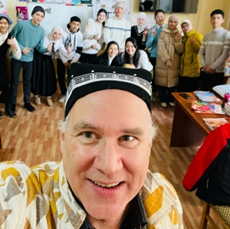
Kevin McCaughey
Regional English Language Officer for Central Asia
Kevin McCaughey is the Regional English Language Officer for Central Asia, US Embassy in Uzbekistan and has offered trainings to teaches in 40 countries, and in such widespread and exotic locations as Kamchatka, Madagascar, Moldova, Yemen, and Zanzibar. He is the primary designer of American English’s most popular publication Activate: Games for Learning American English. He likes when teachers incorporate physical tools and when a lesson has a surprise.
21st-Century-plus Presentation Skills for Teachers and Robots.
In this engaging plenary, Kevin McCaughey explores how teachers can become more effective presenters in any setting: classrooms, staff meetings, conferences—anywhere they are told “the floor is yours.” With humor, and frequent audience surveys and polls, Kevin reveals 10 common Teacher Talk Trip-Ups—mistakes he's made himself—and offers simple, practical strategies to fix them. Along the way, he challenges educators to rethink how they use their voices and presence to connect, lead, and inspire. The session closes with a timely question: As AI continues to reshape communication, will public speaking still matter—and what does that mean for language teachers?
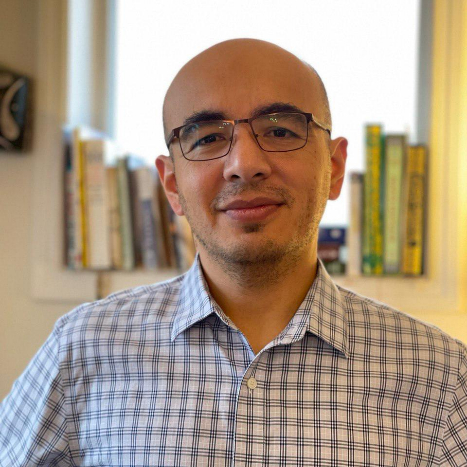
Dr Ulugbek Nurmukhamedov
Teacher in MA TESOL program at Northeastern Illinois University (USA)
Dr. Ulugbek Nurmukhamedov teaches in the MA TESOL program at Northeastern Illinois University (USA). His research interests include second language vocabulary and computer-assisted language learning. He has published in these research areas in various journals, including TESOL Journal, ELT Journal, Language Teaching, and the International Journal of Lexicography. Since 2021, Ulugbek has co-authored with his Uzbekistani ELT colleagues five empirical papers and ten book reviews in prestigious academic journals. His book (with Randall Sadler) is titled New Ways in Teaching with Games (2020, TESOL Press).
Language Teachers’ Research Engagement: Myths and Realities.
The “publish or perish” phenomenon is a global reality in academia, and it is becoming increasingly prevalent in Uzbekistan’s English Language Teaching (ELT) context. Many ELT educators, including pre-service and in-service teachers as well as graduate students in foreign language education programs, face increasing pressure to publish in high-quality peer-reviewed academic journals but in the process often encounter significant challenges. Drawing from his extensive collaborative research projects and publications co-authored with Uzbekistani-based ELT colleagues, in this engaging session Ulugbek will: (1) debunk some common myths about academic publishing and (2) offer practical guidelines that help novice as well as experienced language teachers engage in (i.e. reading) and engage with (i.e., conducting) research that can support language instruction. The attendees will not only gain valuable insights about scholarly writing for research publication purposes but also explore useful resources that help them navigate the complex world of peer-reviewed journals.
Dates
IMPORTANT DATES
20 March 2025
Notification of acceptance
2-3 May 2025
Event
1 June 2025
Full paper submission
Registration
REGISTRATION
Language Teachers’ Research Engagement: Myths and Realities.
Participants who wish to attend the conference need to complete this form. As seats are limited and we need to plan resources accordingly, we kindly ask that you only register if you are fully committed to attending.
https://forms.gle/eYHKXuMyi6wdQjCb7
Conference times: May 2-3, 2025 from 9 am to 18.00
Venue: WIUT, 12 Istiqbol street, Tashkent, Uzbekistan Online link will be emailed to registered participants.
Note: Conference speakers are not required to fill this form.
Submission
SUBMISSION
Please follow one of sample abstracts to develop your own abstract:
Sample 1 - A sample proposal for empirical study
Sample 2 - A sample proposal for professional application
Sample 3 - A sample proposal for a workshop
Please use this link or the button below to submit your abstract. Please note that the application form is not saved - please submit it once you have filled all the sections.
Format
CONFERENCE FORMAT
The mode of the conference
The Conference will be organized in a hybrid mode bringing in-person and virtual participants together.
Presentation format
Presentation (20 minutes for presentation and 10 minutes for Q&A)
Poster presentation (in A1 format 15 minutes)
Workshop (45 minutes for delivery and 10 minutes for Q&A)
The conference working language is English.
Committee
SCIENTIFIC COMMITTEE
ICEL 2025 Conference chair
Dr. Lobar Babakhodjaeva, Westminster International University in Tashkent
Scientific Committee members
Dr. Lobar Babakhodjaeva, Westminster International University in Tashkent
Dr. Khikmatullo Urazbaev, Westminster International University in Tashkent
Dr. Mandana Arfa-Kaboodvand, University of Eswatini
Dr. Saida Akbarova, Westminster International University in Tashkent
Dr. Nodira Isamukhamedova, Westminster International University in Tashkent
Dr. Gunjan Jain, Westminster International University in Tashkent
Dr. Liliya Makovskaya, Westminster International University in Tashkent
Dr. Albina Fakhrudinova, Westminster International University in Tashkent
Ms. Elena Volkova, Westminster International University in Tashkent
Ms. Iroda Saydazimova, Westminster International University in Tashkent
Mr. Aziz Kholmatov, Westminster International University in Tashkent
Mr. Erkin Mukhammedov, Westminster International University in Tashkent
Organizing Committee leader
Dr. Nodira Isamukhamedova
Organizing Committee members
Ms. Saida Rajabzade, Westminster International University in Tashkent
Ms. Feruza Ahmedova, Westminster International University in Tashkent
Ms. Rozaliya Ziryanova, Westminster International University in Tashkent
Ms. Rano Rozikova, Westminster International University in Tashkent
Ms. Gulnoza Kamilova, Westminster International University in Tashkent
Ms. Kholida Begmatova, Westminster International University in Tashkent